The New EU ELV Regulation — A Plain-English Guide
On 12 December 2025 the Commission, Council and Parliament reached a provisional agreement on the new End-of-Life Vehicles regulation. Coreper endorsed it on 25 February 2026. The text replaces the existing 2000 directive and the type-approval directive, setting binding rules for vehicle design, dismantling, recycling, and recycled content. This guide explains what changes for car owners, dismantlers, and the resale market across Europe.
The headline number: 15 % then 25 % recycled plastic
The most-cited figure is the recycled-plastic mandate phased in over a decade:
- Year 6: 15 % recycled plastic content in new vehicles.
- Year 10: 25 % recycled plastic content.
- From day one of the mandate: at least 20 % of that recycled plastic must come from materials recovered from end-of-life vehicles — meaning your old car becomes a literal input for the next generation of cars.
Only post-consumer recyclate counts toward the target. Chemical recycling is allowed using mass-balance accounting, but the Commission will define the verification method within 24 months of entry into force.
Why this raises the value of certified scrap
For decades, end-of-life vehicles have been treated as a waste problem. The new regulation flips them into a strategic feedstock. Three consequences for vehicle owners:
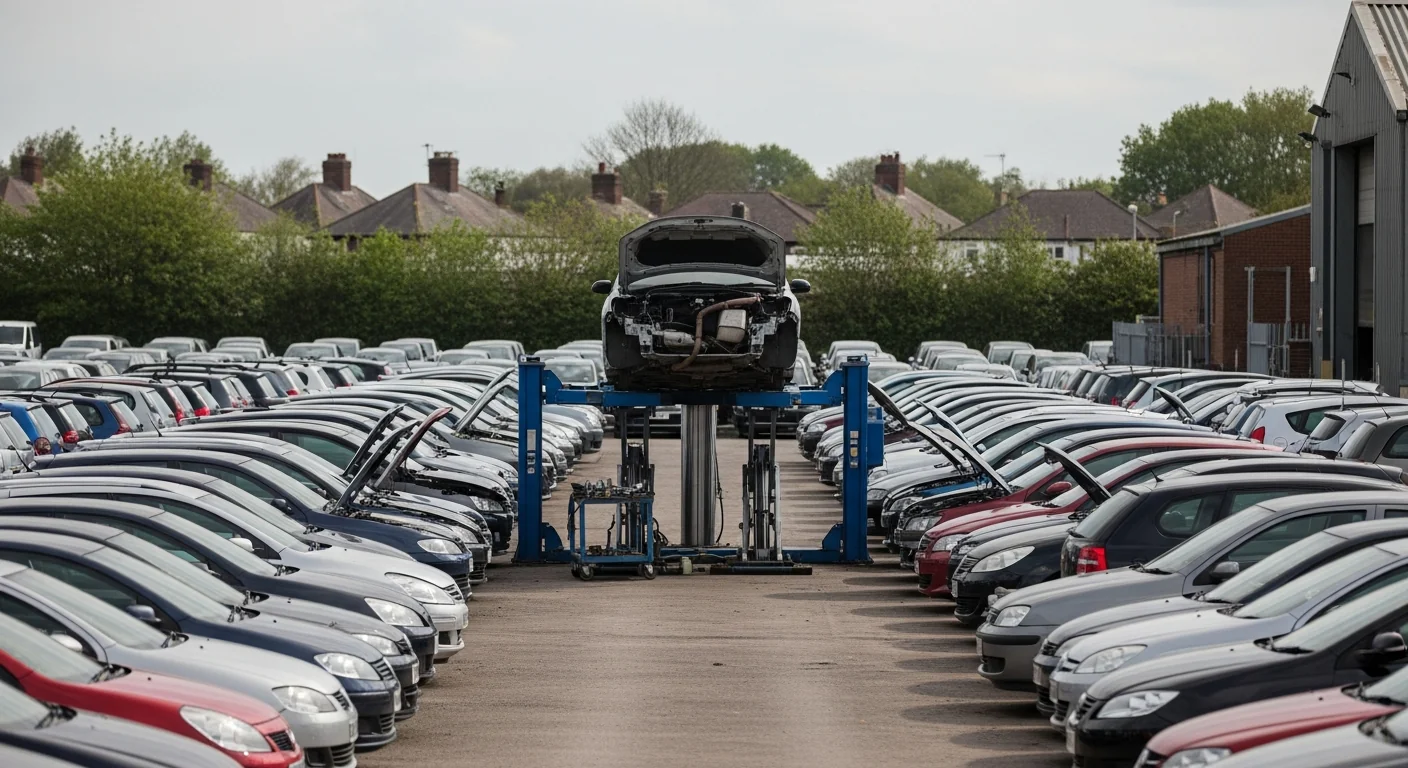
- Authorised Treatment Facilities (centres VHU agréés, anerkannte Verwertungsbetriebe, ATFs) become more competitive. They will compete to secure your old car, not just to take it off your hands. Expect quotes to rise gradually for clean, well-documented end-of-life vehicles.
- Unauthorised yards lose ground. The recycled-content mandate requires full traceability — only certified flows count toward manufacturer compliance. Selling to a back-street scrapper at the door cuts you out of the new value chain and remains illegal anyway.
- Battery and EV recycling is governed by a separate EU regulation (2023/1542) with its own recycled-content thresholds: 16 % cobalt, 6 % lithium, 6 % nickel in 2031, rising to 26 % cobalt and 12 % lithium in 2036.
What changes for vehicle owners in practice
- Certificate of destruction stays mandatory — wherever you are in the EU, the document remains your legal exit from owner liability.
- Digital product passport for batteries — EV and industrial batteries will carry a unique identifier with state-of-health, chemistry and reuse-history data. Expect this to affect EV resale value: a battery with full passport history will fetch more.
- Vehicle design changes are upstream — manufacturers must design for disassembly. Owners of pre-regulation vehicles will not retrofit anything; the impact is on cars produced after the regulation enters force.
- Cross-border consistency — uniform rules across all 27 member states reduce the friction of registering a recycled-content vehicle imported from another country.
What changes for dismantlers and InterCar partners
- Demand for sorted, traced ELV-derived plastic and steel will spike as manufacturers race to hit the 15 % target.
- Catalytic converter recovery — already a high-value flow — becomes part of a documented chain to feed precious-metal demand.
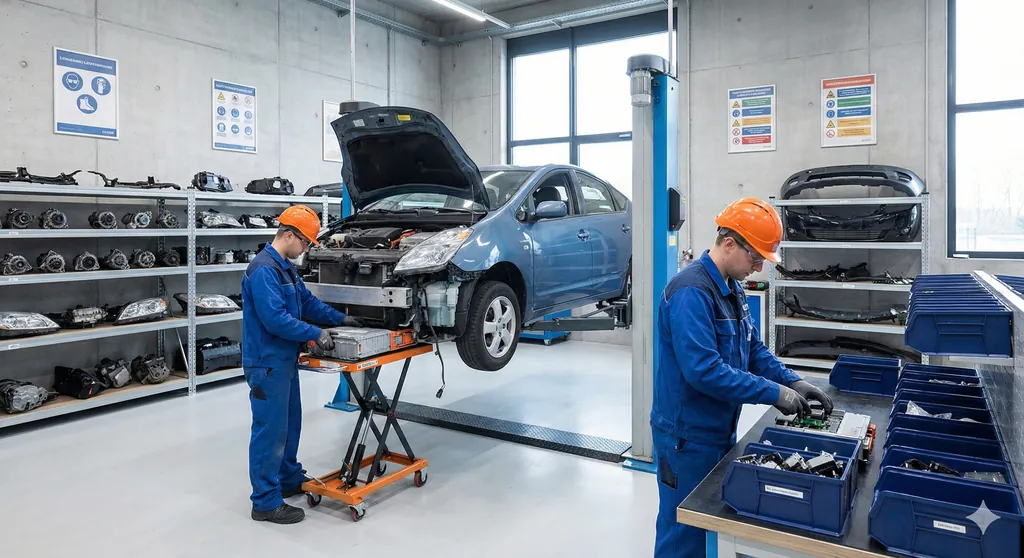
- Battery dismantling capacity becomes a strategic bottleneck. InterCar's authorised network is already certified for high-voltage handling.
Timeline at a glance
- 2026-02-25: Coreper endorses the provisional agreement.
- 2026 (later): Final adoption by Council and Parliament.
- +24 months: Verification methodology for recycled content adopted.
- +6 years from entry into force: 15 % recycled plastic mandate kicks in.
- +10 years: 25 % recycled plastic mandate.
How InterCar fits the new framework
All InterCar dismantling partners are authorised treatment facilities. We issue the EU-compliant Certificate of Destruction (Certificat de destruction in France, Verwertungsnachweis in Germany, Sloopverklaring in the Netherlands, Certificado de destrucción in Spain) and track materials through the recycled-content chain. Whether you are scrapping a Crit'Air 5 diesel in Paris, an Unfallauto in Hamburg, a sloopauto in Amsterdam or a desguace candidate in Madrid, the paperwork conforms to the new regulation.
Get a free scrap collection quote through our authorised network, or read the country-specific guides on German abmelden, French carte grise barrée and UK scrap car value.