Recycled Plastics, Steel and Aluminium in New Cars: Inside the EU End-of-Life Vehicles Regulation
Europe is rewriting the rules of how vehicles are built, dismantled and recycled. The revised End-of-Life Vehicles (ELV) Regulation moves the European automotive sector firmly into the circular era: every new car will have to embed a measurable share of recycled materials, every end-of-life vehicle will need to feed verified raw materials back into manufacturing, and every actor in the value chain — from OEMs to certified vehicle recyclers — will operate under a tighter, more transparent framework.
This article unpacks the targets, the practical consequences for vehicle owners and recyclers, and the opportunities the new regulation opens for the European circular economy.
From Directive to Regulation: A Stronger Legal Tool
The European Union has regulated end-of-life vehicles for more than two decades through the original ELV Directive, which set the now-familiar target of recovering at least 95% of a vehicle's weight. The revised framework changes the legal nature of the rules: they become a Regulation, directly applicable in every Member State, with harmonised obligations covering vehicle design, dismantling, treatment and recycled content.
The shift is meaningful. Instead of national variations, manufacturers, transporters and recyclers face a single playing field, supported by a stricter set of obligations on traceability, depollution and material recovery. Our deeper guide on EU end-of-life vehicle recycling regulations explores the previous framework in detail; the new Regulation builds directly on those foundations.
The Mandatory Recycled-Plastic Targets
The most concrete novelty of the revised ELV Regulation is the introduction of mandatory recycled-plastic content in new vehicles placed on the European market. The text foresees a stepped pathway:
- 15% recycled plastic in new vehicles within six years of entry into force.
- 20% recycled plastic within eight years.
- 25% recycled plastic within ten years.
- 20% of that recycled plastic must come from end-of-life vehicles or reused components — a closed-loop quota that links directly to the dismantling and recycling chain.
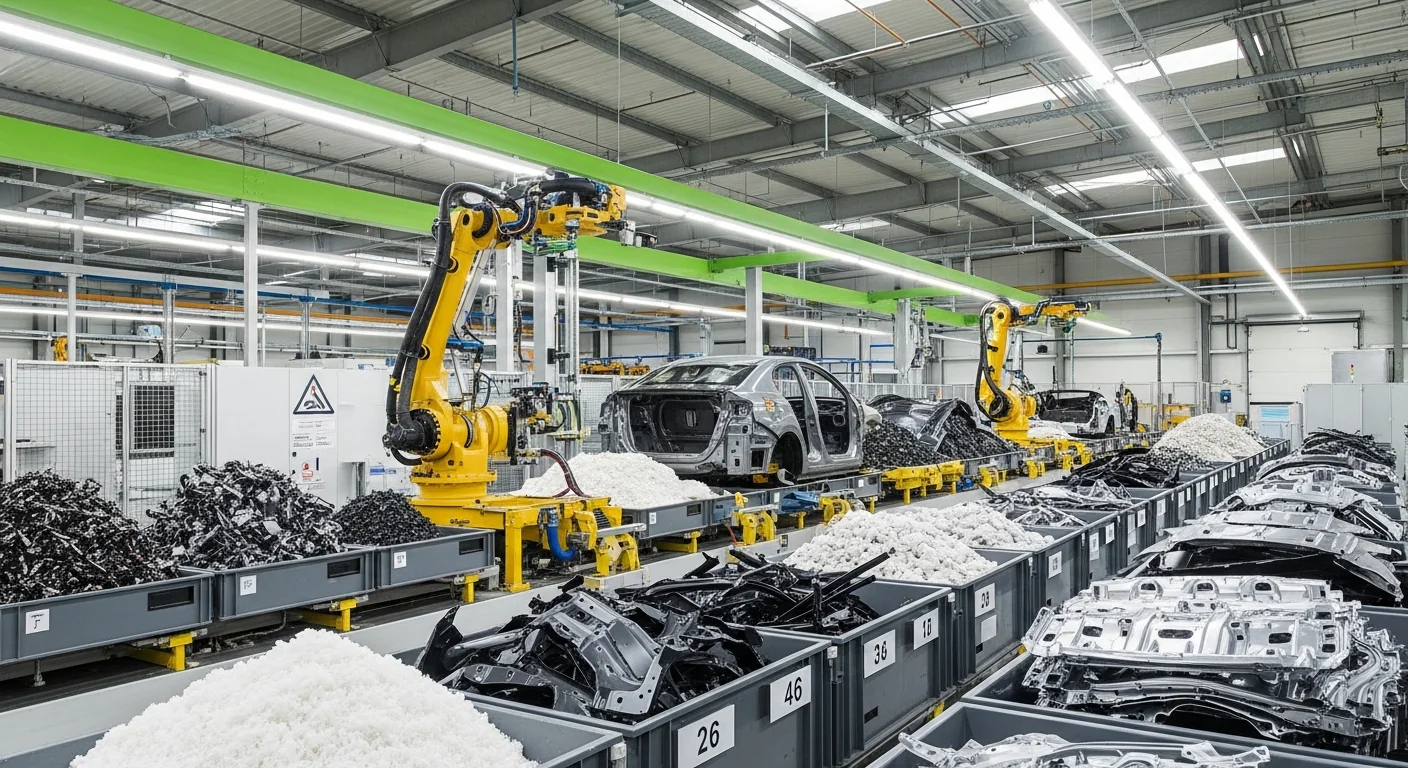
For OEMs, the targets are a design challenge: bumpers, dashboards, wheel arches, interior trims and many other components must be re-engineered to accept recycled polymers without compromising safety or perceived quality. For certified vehicle recycling operators, the targets create new revenue streams, since dismantled and prepared polymers gain value as compliance materials rather than commodity scrap.
Steel, Aluminium and Critical Raw Materials
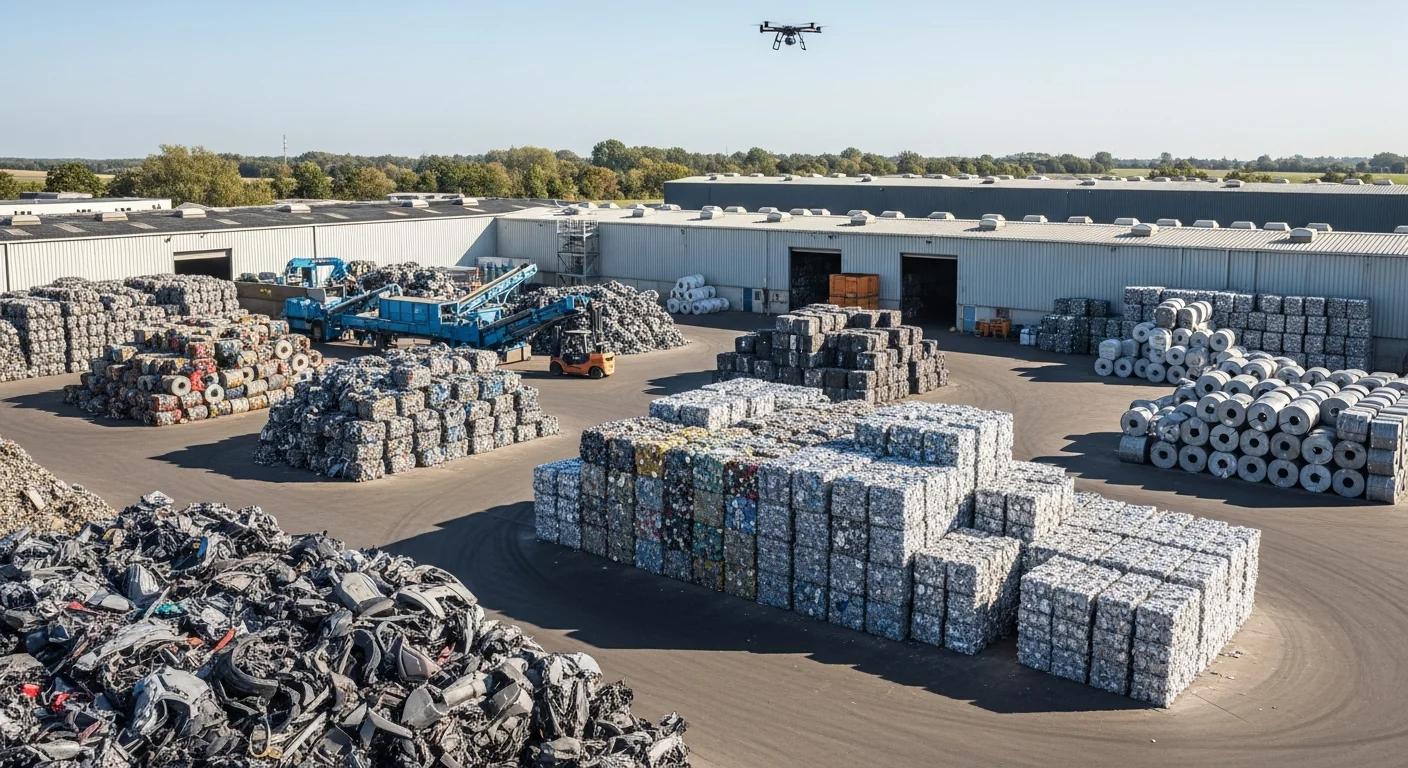
Plastics are only the first chapter. The Regulation tasks the European Commission with conducting feasibility studies — within roughly twelve months of entry into force — covering recycled-content targets for steel, aluminium, magnesium and critical raw materials such as rare earths used in motors and electronics. Once these studies are finalised, additional binding targets are expected to follow through delegated acts.
The stakes are very large. Industry estimates suggest the new measures could enable the recovery of:
- Several million tonnes of steel each year.
- One to two million tonnes of aluminium.
- Hundreds of thousands of tonnes of copper.
- Hundreds of tonnes of rare earth materials.
For dismantlers, this is a structural opportunity. For owners of end-of-life vehicles, it means that scrapping a car is no longer a low-value transaction at the end of its life: it becomes the entry point of a regulated, traceable supply chain feeding European industry.
Design for Circularity: Rethinking the Vehicle Itself
Recycled content cannot be retrofitted onto vehicles built to be hard to dismantle. The Regulation therefore reinforces obligations around design for circularity:
- Easier separation of plastics, glass, metals and electronics during dismantling.
- Clear marking of components containing hazardous substances or critical raw materials.
- Restrictions on the use of substances that complicate recycling, such as certain flame retardants or composites.
- Stronger requirements on access to repair information for authorised partners, supporting longer vehicle lives.
For drivers, this translates into vehicles that age better, are more repairable and retain higher residual value — which is increasingly important in a market where used cars dominate transactions and cross-border resale is the norm. Owners thinking ahead about selling a used car or comparing options on online auctions can already favour models with strong dismantling and parts-availability profiles.
Traceability: From Vehicle Identification Number to Recycled Pellet
To enforce recycled-content targets, the Regulation strengthens traceability across the entire chain. Authorised treatment facilities will need to demonstrate, with documented evidence, where the materials they recover are processed and how they are reintegrated into manufacturing. Digital tools — including the Digital Battery Passport for EV batteries, covered in our dedicated article — will play a growing role in proving compliance.
Practically, this means:
- Stricter documentation when a vehicle reaches end of life.
- Mandatory issuance of certificates of destruction with full digital records.
- Closer integration between transport, dismantling and recycling partners.
- Less room for spot-market or non-certified operators handling end-of-life vehicles informally.
For owners, the takeaway is simple: only certified recycling operators can deliver the legal documentation needed to deregister a vehicle properly and to comply with insurance and tax requirements.
Cross-Border Logistics: The European Recycling Network
End-of-life vehicles do not respect borders. Many cars sold new in one Member State spend their final years in another — and the new Regulation acknowledges this reality by harmonising obligations and tightening rules on illegal exports of damaged vehicles outside the EU. Cross-border logistics become a strategic capability:
- Authorised vehicle transport partners must integrate with recycling hubs and respect waste-shipment rules.
- Connected dispatch and AI route optimisation, explored in our article on AI route optimisation in European vehicle logistics, become essential to keep operations efficient and compliant.
- Operators will need to prove that every kilometre travelled by an end-of-life vehicle leads to a certified treatment facility.
What Vehicle Owners Should Do Now
While the Regulation primarily targets manufacturers and recyclers, it also reshapes the day-to-day decisions of vehicle owners:
- Always use a certified recycler. Confirm that the operator can issue an official certificate of destruction.
- Keep a clean service and damage history. It supports both resale value and traceability.
- Plan end-of-life logistics in advance. Booking a professional collection through a scrap removal service avoids fines and ensures the vehicle enters the legal chain.
- Compare buy-back and recycling options. Many vehicles still have residual value through vehicle buying or auctions before reaching end of life.
A Stronger Industrial Backbone for Europe
Beyond the regulatory text, the revised ELV Regulation reflects a deeper strategic ambition: to anchor a circular automotive industrial base in Europe, less dependent on imported raw materials and better aligned with climate goals. Each authorised treatment facility, each transport partner integrated into the chain, and each driver who chooses certified end-of-life options contributes to that backbone.
For more context on the broader transformation, our piece on the automotive circular economy in Europe explores the underlying business models, while scrap-car incentive programmes show how Member States are translating these ambitions into direct financial support for citizens.
InterCar operates at the intersection of these flows, combining vehicle buying, professional auctions, certified recycling, towing and fleet management across Europe. The new ELV Regulation is not a constraint to navigate; it is the framework that makes the next generation of automotive logistics — efficient, traceable, and circular — possible.