Cross-Border Used Car Imports in Europe: Compliance, Logistics and Smart Buying
The European used car market is one of the largest and most dynamic in the world. Strong price differentials between countries, a deep stock of well-maintained vehicles in markets such as Germany and France, and the rise of digital vehicle auction platforms have turned cross-border imports into a routine option for private buyers, dealerships and fleet operators alike. Done right, importing a used car from another European country can save several thousand euros. Done wrong, it can mean fines, registration issues and unexpected logistics costs.
This guide explains how cross-border used car imports work in practice, how to verify the vehicle, how to handle registration and taxation, and how a professional vehicle transport and vehicle buying partner can secure the entire process.
Why So Many European Drivers Buy Across Borders
The European used car market is shaped by a few structural realities:
- Asymmetric supply. Markets such as Germany generate huge volumes of off-lease and ex-fleet vehicles, often with full service histories.
- Asymmetric demand. Buyers in countries with smaller domestic stocks or higher new-car prices look abroad for value.
- Digital transparency. Online marketplaces and professional auctions publish detailed condition reports that allow remote evaluation.
- Cost of new cars. Persistent inflation in new-vehicle prices pushes households and businesses towards quality used vehicles.
- Fleet electrification. Corporate fleets cycle through vehicles faster, especially as they migrate to electric and hybrid models, releasing strong used stock onto the market.
Together, these forces explain why a buyer in Spain may rationally look at a hatchback in Germany, or a fleet manager in the Netherlands at a batch of saloons in France.
The Six Building Blocks of a Successful Import
A successful cross-border used car import has six core building blocks. Skipping one of them is the most common cause of friction.
- Sourcing — Marketplace, auction or direct dealer purchase.
- Verification — Vehicle history, mileage and identification checks.
- Payment — Secure transfer with traceable proof.
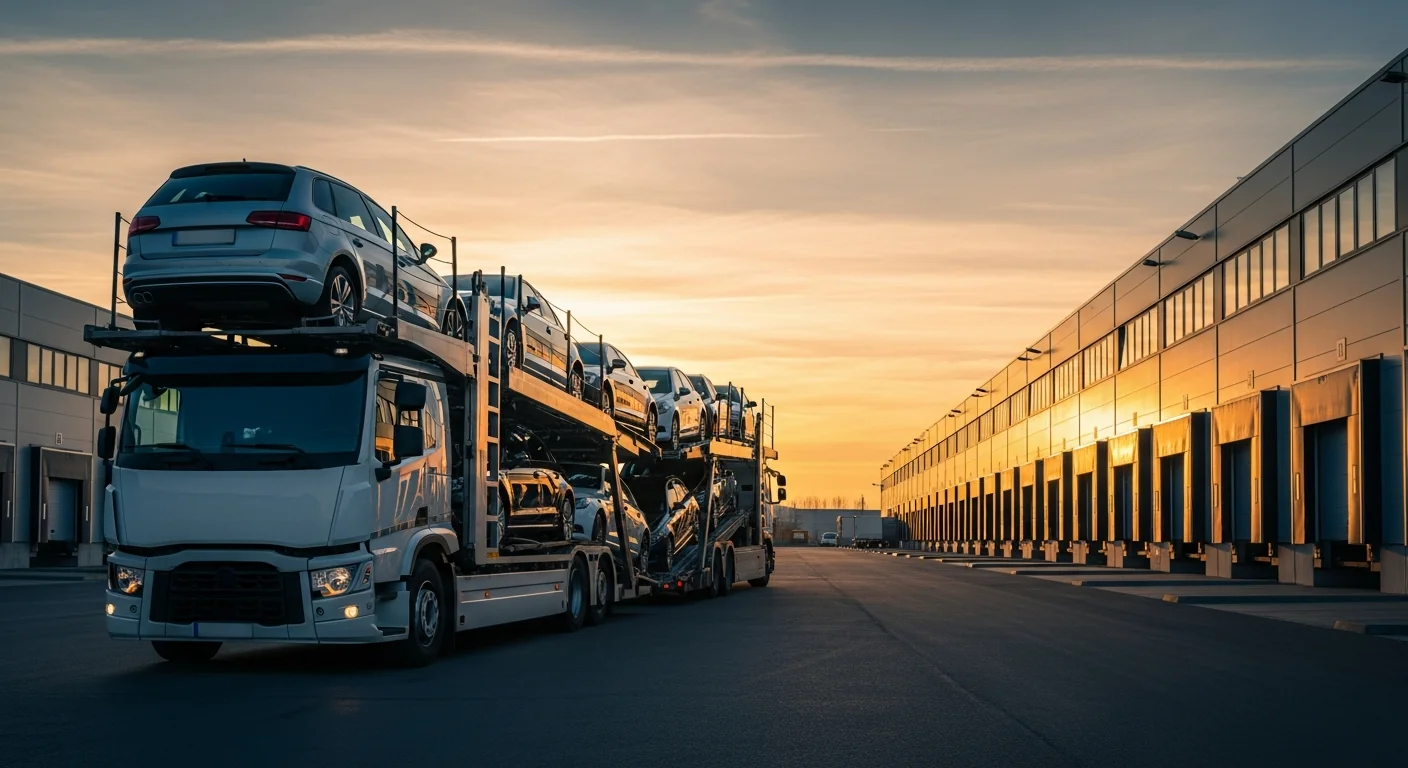
- Transport — Compliant cross-border vehicle transport, ideally on flatbed trucks or enclosed transporters for prestige and electric vehicles.
- Taxation and registration — VAT, registration tax and emission-related fees in the destination country.
- Post-import compliance — Roadworthiness inspection, plate change and insurance.
Each step has its own pitfalls, and the best results come from treating the import as a single coordinated project rather than a series of disconnected transactions.
Verifying the Vehicle Before You Pay
The single highest-impact step is verification. A modern used car is a complex assembly with thousands of components and an extensive digital history. Before any payment, buyers should:
- Run a full vehicle history check using the VIN — including registrations, accidents, mileage records and theft databases.
- Request the complete service history, ideally with stamps and invoices.
- Validate the roadworthiness certificate from the country of origin.
- For electric vehicles, ask for a battery state-of-health report — our guide on assessing EV battery health explains the metrics in depth.
- Where possible, commission an independent pre-purchase inspection, especially for vehicles bought remotely.
For high-value or specialised vehicles, working with a professional vehicle buying partner who can perform the inspection on the seller's site is often cheaper than discovering hidden faults after delivery.
Logistics: Why Transport Choice Matters
Once the deal is agreed, the vehicle still has to travel. The transport choice has a big impact on cost, risk and timing:
- Self-driving the vehicle home is cheap on paper but exposes the buyer to fuel, tolls, hotel costs, mileage on a freshly purchased car and the risk of breakdowns. It is a poor choice for damaged, prestige or electric vehicles.
- Open multi-car transporters are ideal for standard vehicles in good condition over long distances; they offer the best cost per kilometre.
- Enclosed transporters protect prestige, classic and high-value EVs from weather and road debris.
- Flatbed trucks are the safe option for damaged or non-running vehicles and the only correct way to transport most electric cars.
A professional cross-border vehicle transport partner integrates these options with AI-driven route planning — see our article on AI route optimisation — to deliver predictable timings and competitive prices.
Taxes, VAT and Registration Across Borders
Tax handling is the area where unprepared buyers most often lose money. Rules differ between Member States, but several principles apply across Europe:
- Used vehicles bought from a private seller are usually sold under a margin scheme; VAT is not separately charged, and registration tax is paid in the destination country.
- Vehicles bought from a professional seller may be subject to specific VAT regimes, in particular for "new" vehicles in the EU sense (low mileage and recent registration).
- Registration taxes in the destination country can be heavily linked to CO₂ emissions and engine size — a driver of why electric and efficient vehicles are particularly attractive cross-border.
- Low-emission zones in major European cities can prevent or restrict access for older imported vehicles. Our guide on scrap-car incentives explores how some cities pair restrictions with financial support.
Buyers should always run a full landed-cost calculation before committing, including transport, registration tax, VAT where applicable, technical inspection, plates and insurance.
Compliance and Roadworthiness in the Destination Country
Once the vehicle has crossed the border, the destination country's rules take over. Typical steps include:
- Submission of the foreign registration document and proof of ownership.
- Technical inspection in the destination country, sometimes with additional checks for headlamp aim, emissions and conformity.
- Calculation and payment of registration tax and any environmental fees.
- Issuance of new local registration plates and an updated registration certificate.
- Insurance contract aligned with the new registration.
Importers operating at scale — dealerships, fleet operators, certified resellers — typically integrate these steps into a single workflow with their fleet management partner, eliminating duplicated paperwork and reducing the time between purchase and resale or deployment.
Common Pitfalls and How to Avoid Them
Recurring mistakes in cross-border used car imports include:
- Underestimating odometer fraud risk. Always cross-check mileage records via VIN-based services.
- Forgetting battery checks for EVs. A degraded battery can erase the price advantage of a cross-border deal.
- Choosing the cheapest transporter. Damage caused by poor handling is rarely covered without proper insurance and documentation.
- Misjudging local tax rules. Especially for high-emission or large-engine vehicles entering a country with aggressive CO₂-based registration tax.
- Skipping pre-purchase inspections on auction wins. Even on reputable platforms, a final pre-shipment check protects against last-minute surprises.
Smart Strategies for Different Buyer Profiles
- Private buyers should focus on well-documented vehicles, use trusted marketplaces, prefer flatbed or enclosed transport for valuable cars, and lean on professional inspection services.
- Independent dealers benefit most from professional vehicle auction platforms with verified condition reports, paired with consolidated multi-car transport to control costs.
- Fleet operators typically standardise on a small number of corridors (for example, Germany to France or the Netherlands to Spain) and rely on integrated fleet management services covering sourcing, transport, registration and end-of-cycle remarketing.
Cross-Border, but Coordinated
Cross-border used car imports are no longer a niche activity. They are a core feature of the European automotive market, supported by digital platforms, harmonised regulation and increasingly sophisticated logistics. The buyers who get the best results treat each import as a single project, with verification, transport, tax handling and registration coordinated by partners who specialise in each step.
InterCar acts as that coordinator across Europe, combining vehicle buying, professional auctions, cross-border transport and fleet management into a single workflow. For more market context, our article on getting the best value when selling a used car mirrors this guide from the seller's perspective, while the broader automotive circular economy piece explains why cross-border flows matter for sustainability as much as for price.