How AI Route Optimisation Is Reshaping European Vehicle Logistics and Towing
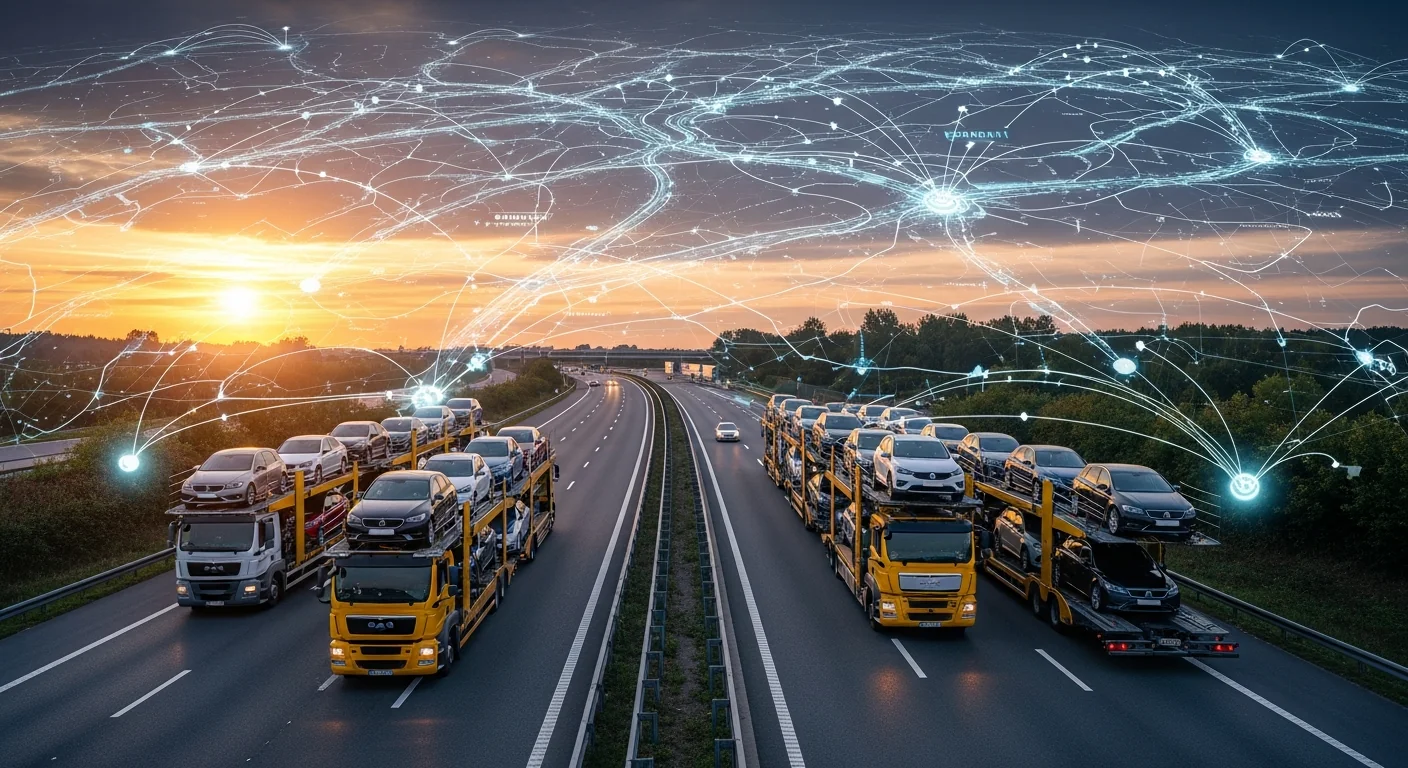
Across European motorways, ferry terminals and city ring roads, an invisible layer of intelligence now decides which truck collects which vehicle, in which order, on which corridor and with which charging stop. AI-powered route optimisation has moved from a futuristic promise to an operational standard inside the most efficient vehicle towing and transport networks. For drivers, fleet managers and dealerships, the impact is concrete: shorter waiting times, lower transport costs and a measurable reduction in emissions.
This article unpacks why route optimisation is becoming the backbone of modern automotive logistics, what changes for operators on the ground, and how to choose a transport or breakdown service partner that can prove its technological maturity.

From Static Schedules to Continuous Optimisation
Traditional vehicle logistics relied on day-of dispatch sheets and the experience of seasoned dispatchers. The model worked at modest scale, but it could not absorb the complexity of pan-European movements: cross-border tolls, rest-time regulations, low-emission zones, ferry windows, customer slot constraints and the simple fact that no two breakdowns are the same.
AI route optimisation replaces fixed schedules with a continuously updated decision graph. Each truck, each driver and each vehicle being moved becomes a node connected by hundreds of variables — distance, fuel or charge level, hours-of-service, vehicle category, axle load, customer priority and even predicted weather along the route. The system rebalances the entire plan every time a new request arrives, a vehicle is delayed, or a corridor becomes congested.
The result is a transport plan that is not just shorter but smarter. According to recent industry research, AI-driven optimisation can deliver double-digit reductions in empty kilometres and meaningful gains in on-time performance — gains that translate directly into lower prices for customers and better margins for operators investing in professional fleet management.
Why Vehicle Logistics Is Particularly Hard to Optimise
Compared with parcel delivery, moving cars and light commercial vehicles across Europe poses unique challenges:
- Heterogeneous loads — A single transporter may carry a mix of compact city cars, electric SUVs, prestige saloons and damaged accident vehicles, each with its own securing, height and ground-clearance constraints.
- Cross-border regulation — Driver rest times, cabotage limits, environmental zones, weight restrictions and customs procedures vary between France, Germany, the Netherlands, Spain, the United Kingdom and beyond.
- Time-critical pickups — A roadside breakdown or accident demands a response within minutes; a dealership delivery must arrive within a precise slot.
- Asset utilisation — Empty return legs are the single largest source of waste in automotive transport, and reducing them is mathematically complex when origins and destinations are highly fragmented.
AI excels precisely where human dispatchers struggle: combining many small constraints simultaneously and updating the answer in seconds rather than hours.
The Building Blocks of an Intelligent Transport Engine
A modern automotive logistics platform typically combines four layers:
- Real-time telematics — Position, fuel or state-of-charge, mileage, fault codes, driver hours, secure load status. Without clean data, no optimisation is possible.
- Demand forecasting — Machine learning models trained on historical demand, seasonality, weather and vehicle population predict where breakdowns and transport requests will originate next.
- Constraint solver — A mathematical engine that respects driver regulations, vehicle compatibility, low-emission zones and customer service-level agreements while minimising distance, time or carbon.
- Driver and customer apps — Turn-by-turn instructions, photo proofs of pickup and delivery, automatic notifications and digital documents that close the loop with the customer.
Together, these layers turn a fleet of trucks into a self-balancing network. They are also the foundation of the proactive notifications that power modern breakdown service dispatch and the predictable lead times offered by digital vehicle auction platforms when delivering purchased cars across Europe.
Lower Emissions, Lower Bills
Sustainability is now a board-level expectation in European automotive logistics, both because of regulation and because customers increasingly choose suppliers based on carbon performance. AI optimisation contributes on three fronts:
- Fewer kilometres driven — Better routing eliminates avoidable detours and empty legs.
- Less idling and re-routing — Predictive traffic models keep trucks moving and out of jams.
- Smarter EV truck deployment — As electric heavy-duty trucks join the fleet, AI plans charging stops compatible with delivery windows and energy prices.
The same models support fleet managers as they migrate towards electric and hybrid EV solutions, and they help vehicle owners choose certified recycling partners with measurable carbon credentials when a vehicle reaches end of life.
How Drivers and Customers Experience the Change
Most users will never see a routing algorithm. What they notice is simpler:
- The breakdown truck arrives faster and the technician already knows the make, model and likely fault.
- The transporter delivering a purchased car gives a precise hour, not a half-day window.
- Cross-border invoices are predictable because routes, tolls and fuel are simulated upfront.
- The customer support team can answer "where is my car?" in seconds, with a live map.
For high-value moves such as prestige vehicle transport or fleet repositioning, this transparency is no longer a premium feature — it is a baseline expectation.
What to Look for in a Logistics or Towing Partner
Whether you are an individual booking a one-off transport, a dealership moving stock weekly, or a fleet manager rebalancing hundreds of vehicles, the questions to ask have evolved:
- Live tracking on every move — A serious provider gives you a shareable tracking link, not vague time slots.
- API integration — Dealerships and fleets save hours when their DMS or TMS exchanges data directly with the carrier.
- Pan-European coverage with consistent SLAs — Optimisation is only useful when applied to a network large enough to absorb demand peaks across borders.
- Dedicated electric fleet capability — Look for partners running electric tow trucks and transporters where infrastructure allows, especially in low-emission zones.
- Transparent carbon reporting — Ask for per-shipment CO₂ figures aligned with recognised European methodologies.
Connected, Predictable, Sustainable
AI route optimisation is not a marketing layer added to an old business — it is reshaping how European automotive logistics actually work. Operators who invest in the data, the algorithms and the trained dispatchers around them become measurably faster, cheaper and cleaner. Those who do not will find it increasingly hard to compete on price or response time.
For drivers and businesses, the practical takeaway is straightforward: choose partners that can show you the technology behind their service, not just the brochure. Whether you need long-distance vehicle transport, a fast roadside intervention, or a structured fleet logistics programme, intelligence on the road is now as important as the trucks themselves. To explore how InterCar combines an European fleet with modern dispatch software, learn more about our approach to reliable roadside assistance or read how the electric vehicle era is changing the game.