Connected Cars and Predictive Breakdown: The New Face of European Roadside Assistance
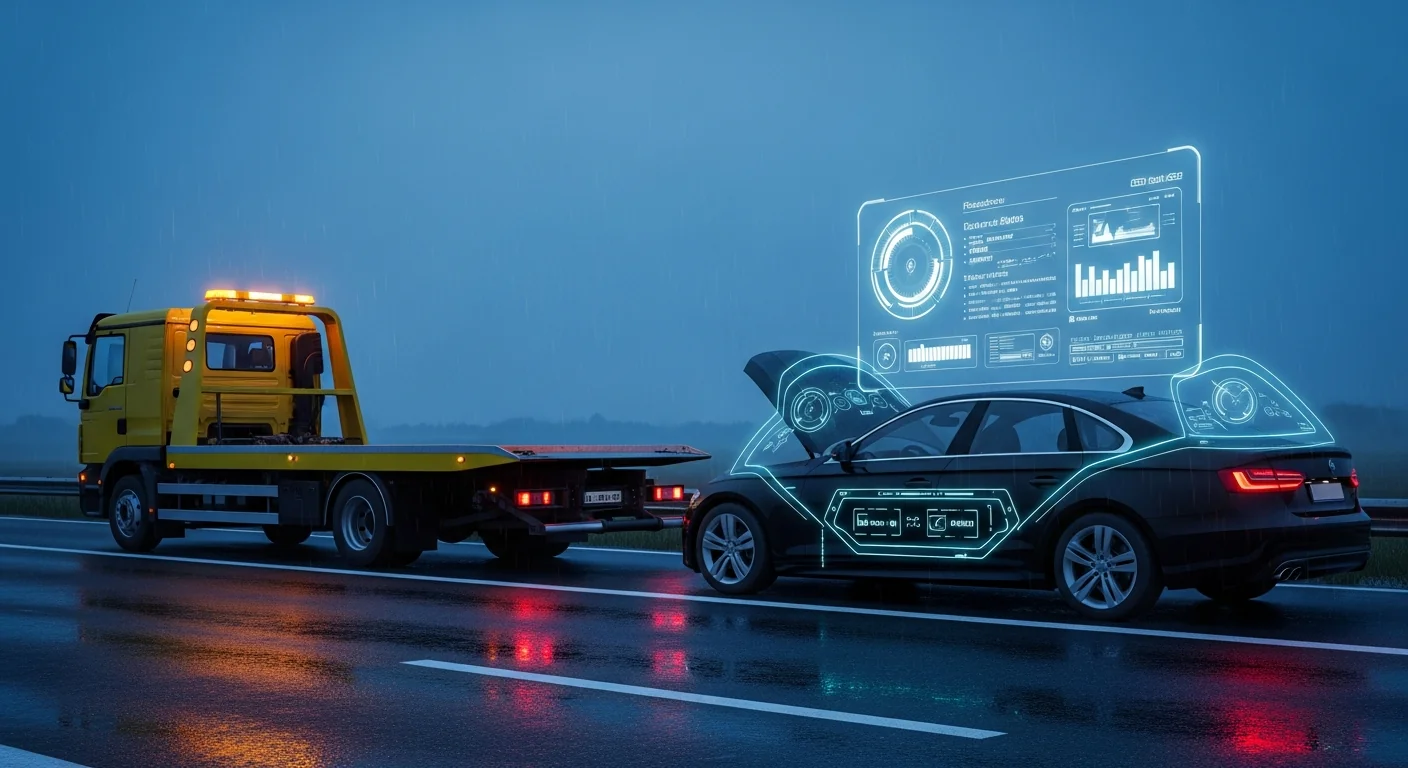
The European roadside assistance market is one of the most mature in the world, but it is also one of the fastest changing. Behind every modern breakdown service sits a layer of connected-car data — fault codes, battery state-of-health, tyre pressures, location, accelerometer events — that the vehicle quietly streams to manufacturers, insurers and authorised partners. The shift is profound: instead of waiting for a stranded driver to call, the best providers are now predicting failures, dispatching help before the breakdown even happens, and using telematics to choose the right truck, the right technician and the right part — first time.
This article explores how connected vehicles, regulatory mandates such as eCall, and predictive maintenance are pushing European roadside assistance from a reactive emergency service into a proactive part of the mobility experience.
From Reactive Calls to Proactive Care
For decades, roadside assistance was triggered by a single event: the driver calling an emergency number after a breakdown. The model is robust, but it is also wasteful. Trucks are dispatched without knowing the fault, technicians arrive without the right parts, and the customer waits, sometimes on a hard shoulder, while the right resources are organised.
Connected vehicles change this equation. With modern telematics:
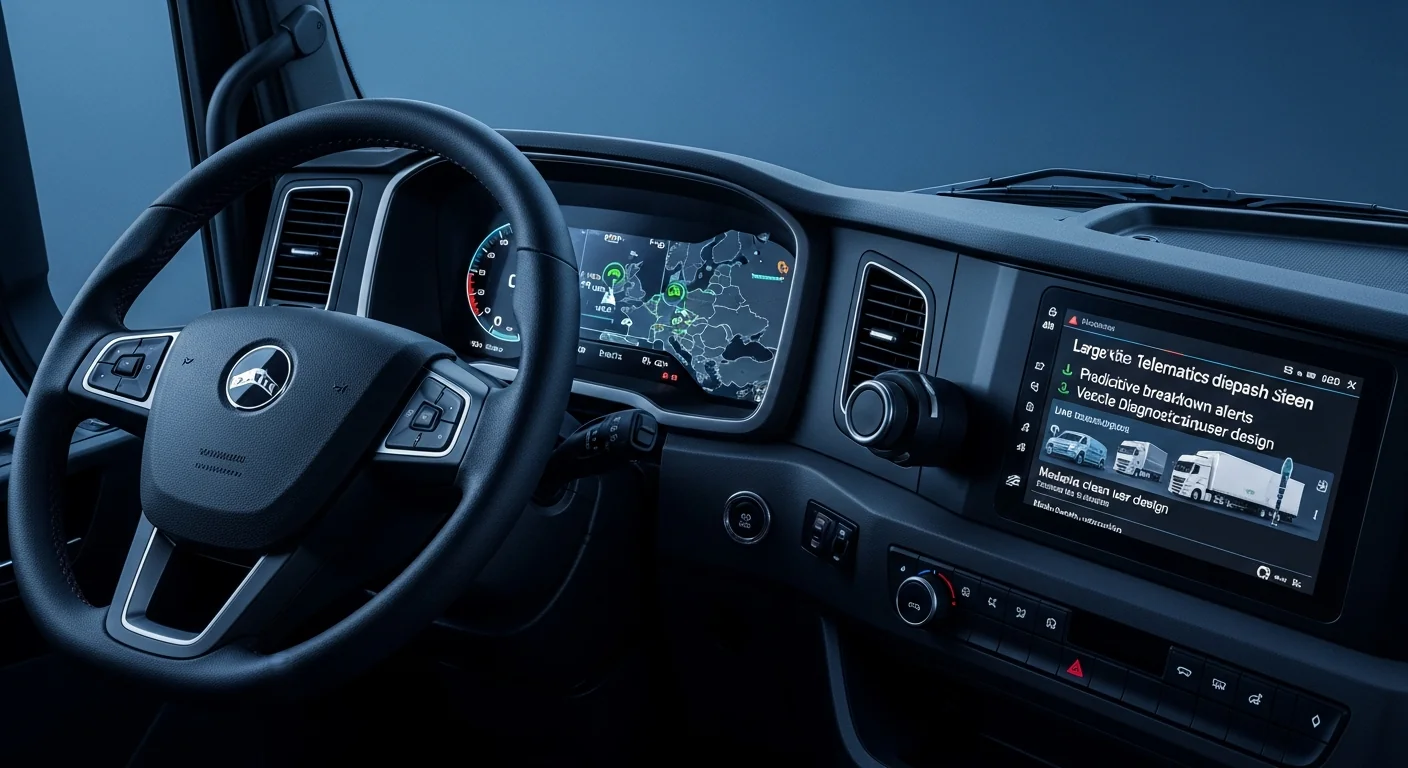
- Onboard diagnostics broadcast fault codes the moment a sensor crosses a threshold.
- Battery management systems flag declining capacity weeks before a no-start.
- Tyre pressure systems alert before a slow puncture becomes a roadside emergency.
- Accident detection systems notify dispatch with location, severity and number of occupants — the foundation of the European eCall mandate.
Together, these signals turn the roadside assistance call from a panic moment into a planned interaction. The customer is contacted, the most likely cause is already identified, and the closest qualified recovery vehicle is on its way.
The Predictive Maintenance Layer
Predictive maintenance is the engine that turns telematics data into fewer breakdowns. Models trained on millions of fault codes and service histories can flag a starter motor that is degrading, a battery that is unlikely to survive the winter, or an alternator producing irregular voltage long before a complete failure on the motorway.
For drivers, the benefits are tangible:
- Fewer roadside emergencies — Many breakdowns are scheduled into a normal workshop visit.
- Lower towing costs — A vehicle that fails predictably is recovered from a depot, not from a fast lane.
- Better resale value — A documented service history backed by telematics data reassures buyers, particularly in vehicle auctions and certified resale programmes.
For fleet managers running mixed combustion and electric vehicle portfolios, predictive maintenance reshapes total cost of ownership. Unplanned downtime is replaced by predictable service windows, which is one of the strongest arguments for moving fleets onto a single integrated fleet management platform.
eCall and the Regulatory Backbone
Europe has been a quiet leader in connected safety. The eCall mandate requires every new passenger car and light commercial vehicle to embed an automatic emergency call system that contacts the 112 service in case of a serious accident. The data minimum set transmitted includes location, direction of travel, time stamp and vehicle identification.
For roadside assistance providers, eCall is more than a safety feature. It is the regulatory foundation on which a connected ecosystem is being built — one where authorised partners can exchange the data necessary to resolve incidents quickly, while respecting drivers' privacy. Modern European breakdown services integrate eCall flows so that, in the event of an accident, recovery is dispatched within minutes and the appropriate flatbed transport is allocated based on the vehicle and the severity of the incident.
How a Predictive Roadside Assistance Call Looks in Practice
The new roadside experience has a different rhythm. Imagine an electric SUV travelling north through France:
- The battery management system detects a thermal anomaly in one cell module.
- Telematics data is shared with the OEM, who triggers a service event with the assistance partner.
- The driver receives a discreet alert and is offered a safe stop with a guaranteed recovery slot.
- The closest EV-trained breakdown technician is dispatched with the right diagnostic equipment.
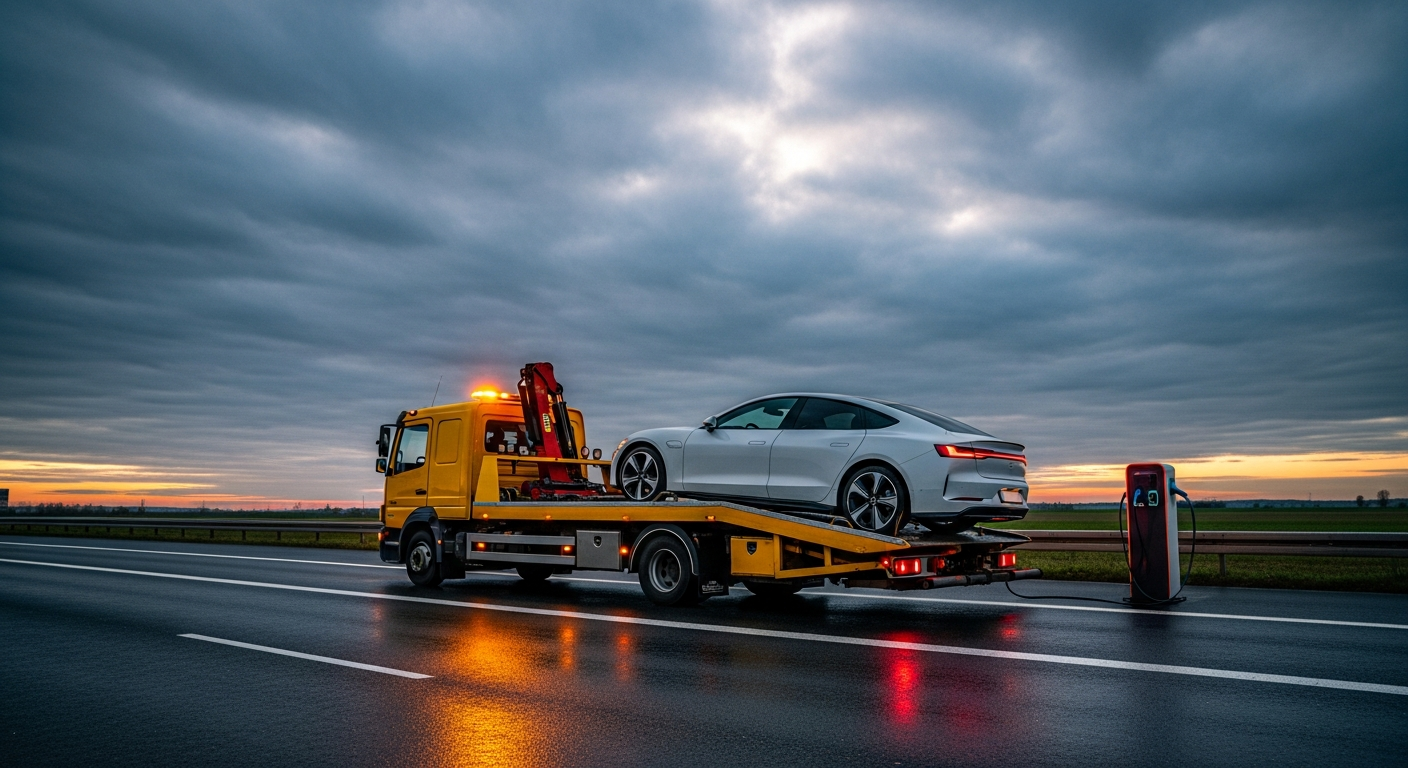
- If the vehicle cannot be repaired on site, a flatbed truck takes over, transporting the EV to the nearest authorised workshop.
- The whole event is logged in the digital service history, which later supports the vehicle valuation when the owner decides to sell or trade in.
For the driver, the experience feels less like an emergency and more like a coordinated service interaction. For the operator, every step is traceable, optimised and, increasingly, automated.
Privacy, Data Ownership and Driver Trust
Predictive breakdown services only work when drivers trust the data flow behind them. European regulation, including GDPR and sector-specific frameworks, requires that:
- Drivers understand which data is collected and for what purpose.
- Data sharing with assistance partners is explicit and limited to the minimum necessary.
- Sensitive information, such as location traces, is protected, anonymised where possible and retained only as long as needed.
A reputable assistance provider will publish clear policies, give drivers granular control, and align with the data-sharing principles backed by European industry bodies. When evaluating a service, ask explicitly how telematics data is used and how long it is stored.
What to Demand from a Modern Roadside Assistance Partner
- Native integration with eCall and OEM telematics — Not just a phone number, but a digital relationship with the vehicle.
- EV-ready fleet — Including flatbed trucks for safe high-voltage vehicle transport.
- First-time-fix metrics — A serious provider tracks the share of breakdowns resolved at the roadside.
- Pan-European reach — Consistent service across France, Germany, the United Kingdom, the Netherlands and Spain.
- Transparent privacy practices — Clear consent flows and short data retention windows.
For broader context, our guide on choosing reliable roadside assistance in Europe walks through the criteria in detail, while the EV-specific challenges article covers how electric vehicles raise the stakes even further.
The Road Ahead: From Service to Mobility Layer
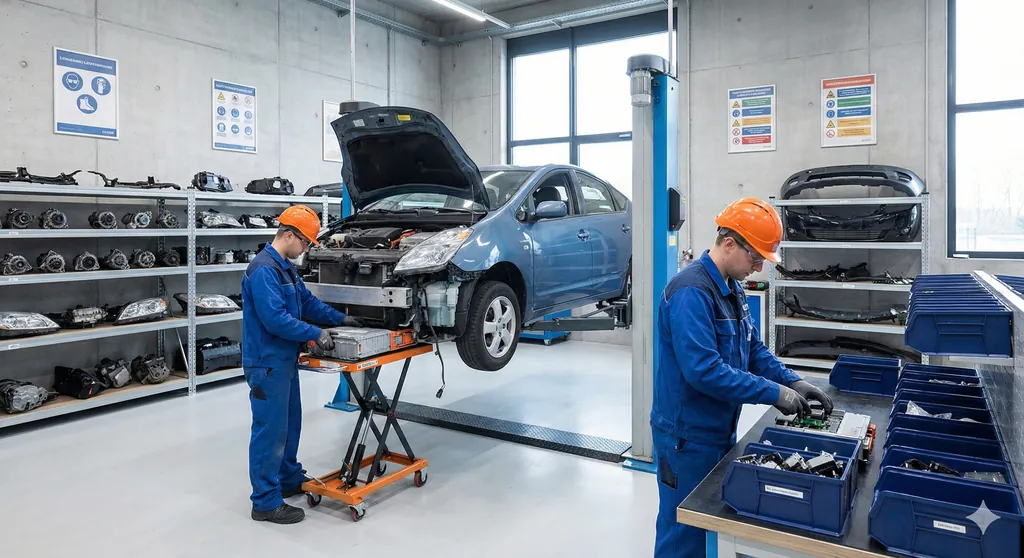
As cars become more connected, roadside assistance is becoming a horizontal mobility layer rather than a vertical product. It connects the driver, the vehicle, the manufacturer, the workshop and the recycling chain — all the way down to certified end-of-life recycling when a vehicle finally retires. Predictive breakdown is one of the first concrete applications of this connected ecosystem, but it will not be the last.
InterCar designs its breakdown, towing and fleet services around this connected reality, with European coverage, EV-ready trucks and dispatch software built for telematics-driven workflows. Whether you drive a single vehicle or manage a fleet, treating roadside assistance as a strategic partnership — not a fallback — is one of the highest-leverage decisions you can make.