Keyless Car Theft — Faraday Pouches, UWB Keys and the Insurance Reality
Vehicle theft hit a 13-year UK high recently and Crime Survey for England and Wales data shows 58 % of vehicle thefts now involve keyless entry methods. In Europe more broadly, France records the highest rate of vehicle theft (248 per 100,000 people), followed by Italy and Germany. This guide explains the mechanics of a relay attack, why UWB (Ultra-Wideband) keys are the next defence, what insurers actually pay out, and the protection checklist every keyless-car owner should follow tonight.
How a relay attack works in 90 seconds
- Thief A stands near your house with a transmitter. The transmitter pings the key fob inside through walls and re-broadcasts the signal at higher power.
- Thief B stands next to the car with a receiver. The receiver picks up the signal and tricks the car into thinking the legitimate key is present.
- Doors unlock, push-button start activates. The whole sequence takes under 90 seconds and leaves no forced entry.
Insurance bodies and police record relay theft as the single fastest-growing vehicle crime vector. Premium SUVs, plug-in hybrids and Range Rovers top the target list because their resale value to export rings is highest.
The four defences that actually work
- Ultra-Wideband (UWB) keys — measure the precise distance between key and car using sub-nanosecond time-of-flight. A relay signal travels too far, the car refuses to unlock. Manufacturers fitting UWB: Apple Car Key (BMW, Hyundai/Kia/Genesis), Volkswagen ID.7, Audi A6 e-tron, Mercedes-Benz S-Class and EQS. If buying a new car, ask the dealer whether the model uses UWB or legacy RFID/Bluetooth.
- Motion-sensor keys — already standard on many post-2020 keys. The fob stops transmitting when stationary for ~30 seconds. Just leave the key still on a shelf, not in a fruit bowl that gets bumped.
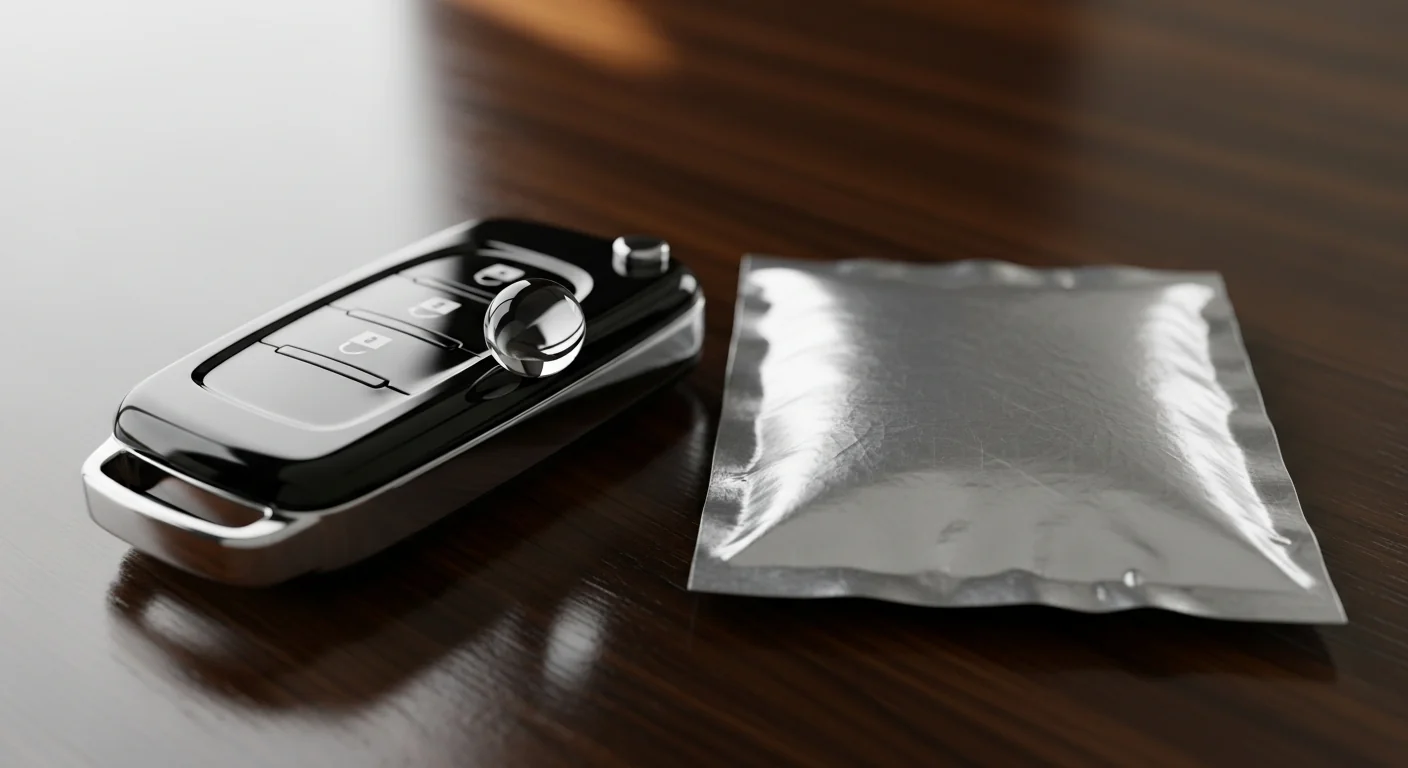
- Faraday pouches and tins — €10-20 for an effective metallised-fabric pouch (look for tested RFID shielding 20 dB+). Test it by trying to unlock your car with the key inside the pouch and standing next to the vehicle; if the car responds, the pouch leaks. Replace pouches after 12-18 months as the metal mesh degrades with use.
- Physical visible deterrents — old-school steering locks (Disklok, Stoplock Pro), wheel clamps, and OBD port locks (thieves often re-program a blank key via the OBD socket). Visible deterrents push the thief to the next driveway.
What insurance actually pays out — read the small print
UK insurers have begun excluding losses where "the keys were left in or near the vehicle". A landmark 2024 case ruled a Range Rover owner was not covered because his keys were stored within a metre of the front door, beyond what the insurer considered "secure storage". Practical advice:
- Store the primary key at least 5 metres from any external wall — ideally in a metal-lined tin in a central interior room.
- Keep your spare key in a Faraday pouch in a different location.
- Photograph the keys, their location, and your Faraday pouch periodically — proof of "reasonable precautions" when claiming.
- Check your policy schedule for "secure key storage" wording and update if needed.
If your keyless car is stolen
The first hour is critical:
- Call police — they obtain ANPR ping data fastest within the first 90 minutes.
- Notify the DVLA via the V5C reference number so the vehicle is flagged.
- Call your insurer and your tracker provider (if fitted).
- Notify your bank if any contactless cards were inside the car.
When the key is just lost — not stolen
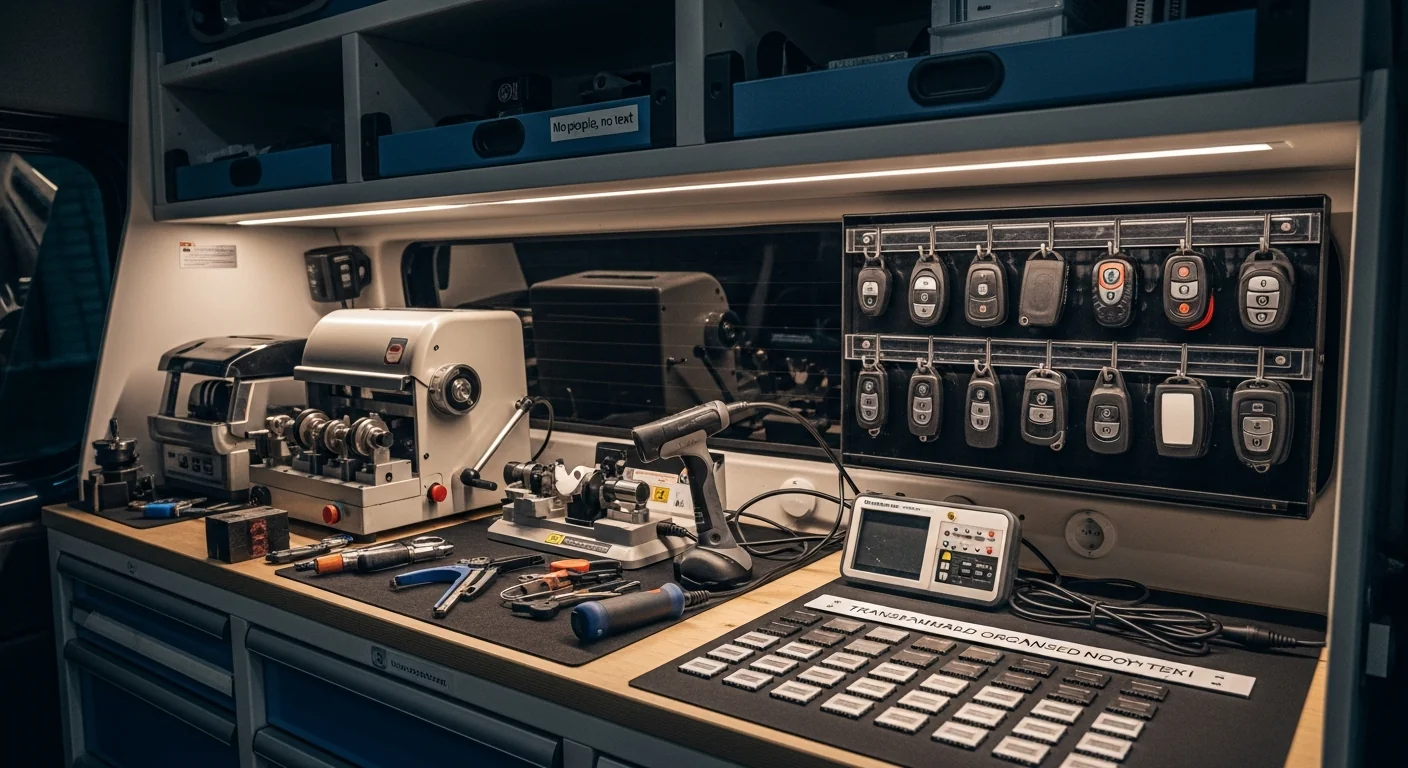
Lost the only key without any sign of theft? A certified mobile auto locksmith can usually cut and program a replacement at your location in 60-90 minutes, depending on whether the manufacturer requires a dealer-only token. Costs typically range from £180 (transponder key) to £900 (premium smart key). InterCar mobile locksmith dispatches across the UK, the Netherlands, Germany and France.
If the car was a write-off after a theft attempt
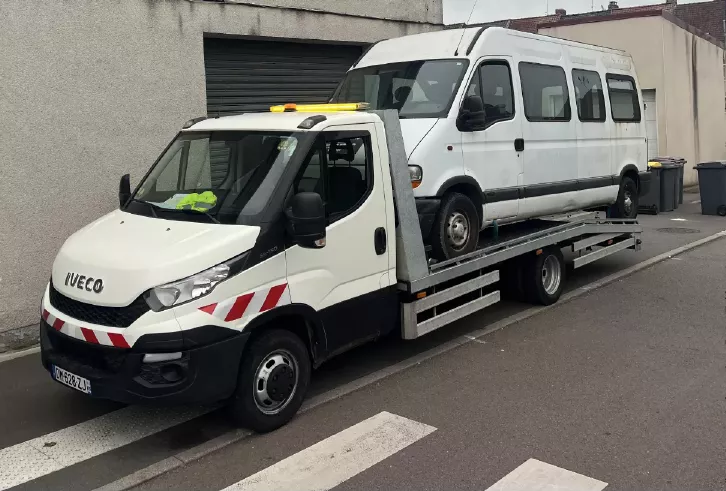
Forced entry damage that exceeds repair economics often turns a recovered vehicle into a Category N or S write-off. In that scenario, our vehicle buying service pays a fair price even with theft-attempt damage and arranges free collection. When the engine or transmission was damaged in the get-away attempt and the vehicle is now a non-runner, our free scrap collection handles the destruction paperwork.
The protection checklist (under £30 total)
- Two Faraday pouches (one per key) — £15-20.
- Steering lock — £40-90 (visible deterrent).
- OBD port lock — £15-25.
- Smart parking habit — face the car wheels into the kerb, lock all doors manually if possible, park near street lighting.
- Insurance schedule reviewed for key-storage clauses.
The cheapest defences (Faraday + steering lock + smart parking) defeat 90 % of opportunistic relay attempts. Premium UWB keys are the long-term answer; until manufacturers retrofit, the physical layer remains your best protection.
Further reading: Lost car key emergency guide and how to get the best value when selling a used car.