Breakdown Services Under Pressure: How the 2026 Fuel Crisis Is Changing Roadside Assistance
The fuel crisis triggered by the 2026 Iran war is not only hurting motorists at the pump — it is fundamentally changing the landscape of breakdown and roadside assistance services across Europe. With diesel above €2 per litre and Brent crude at $112 per barrel, the ripple effects are being felt by every mobile mechanic, recovery truck operator, and roadside assistance provider on the continent.
For millions of European drivers, the risk of a breakdown has never been higher, and the cost of getting help has never been greater. In this article, we explore how the fuel crisis is affecting breakdown services, why certain types of breakdowns are surging, and what you can do to protect yourself during these unprecedented times.
Why Fuel-Related Breakdowns Are Surging
When fuel prices spike, driver behaviour changes — and not always for the better. Breakdown services across Europe are reporting a measurable increase in fuel-related callouts since the Iran conflict escalated. The most common scenarios include:
- Running out of fuel: As prices climb, more drivers are running their tanks dangerously low, hoping to find a cheaper station or simply unable to afford a full tank. This leads to a sharp increase in "fuel starvation" callouts — vehicles stranded on motorways and busy roads with empty tanks.
- Misfuelling incidents: Under financial stress, some motorists are making hurried refuelling decisions, leading to a rise in misfuelling — putting petrol in diesel vehicles or vice versa. Misfuelling can cause severe engine damage and always requires professional recovery.
- Use of substandard fuel: Reports are emerging of drivers turning to discount or unregulated fuel suppliers, some of which provide fuel with higher contaminant levels. This can lead to blocked fuel filters, injector damage, and engine misfires.
- Deferred maintenance: When household budgets are squeezed, vehicle maintenance is often one of the first expenses to be cut. Skipped oil changes, worn brake pads, and ageing batteries all increase the likelihood of a breakdown.
Industry data from the first quarter of 2026 suggests that fuel-related breakdown callouts have increased by approximately 18-22% compared to the same period in 2025. This trend is expected to continue — and potentially worsen — as long as fuel prices remain elevated.
Rising Costs for Breakdown and Recovery Operators
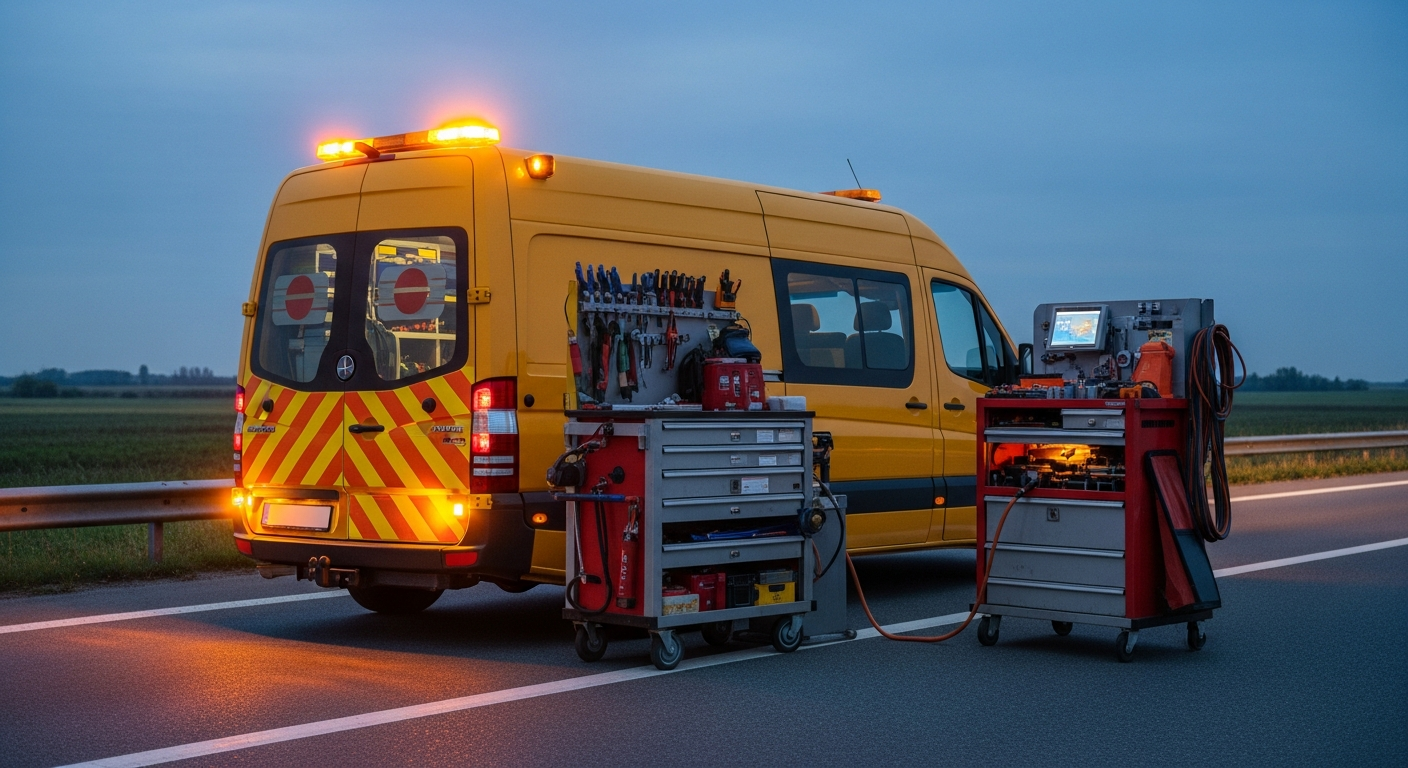
Breakdown service providers are themselves caught in the squeeze. The economics of running a mobile mechanic van or a heavy recovery truck are fundamentally tied to fuel costs. Here is how the crisis is affecting the business side of roadside assistance:
- Fuel costs per callout: A typical breakdown recovery truck consumes 25-35 litres of diesel per 100 kilometres. With diesel above €2/litre, the fuel cost of a single callout has increased by 35-40% compared to a year ago.
- Fleet operating costs: Breakdown providers operating fleets of recovery vehicles, patrol vans, and support cars are seeing their total fuel bills rise dramatically. For a mid-sized operator with 50 vehicles, the additional annual fuel cost could exceed €150,000.
- Parts and consumables: The same supply chain disruptions affecting the broader automotive industry are driving up prices for common breakdown consumables — batteries, tyres, bulbs, and fluids.
- Labour costs: Technicians and recovery drivers are increasingly seeking wage adjustments to compensate for their own rising commuting costs, adding further pressure to service pricing.
These increased costs are inevitably being passed on to consumers, either through higher per-incident charges or increased annual membership fees for roadside assistance programmes.
Impact on Response Times
The combination of higher call volumes and increased operational costs is affecting response times. Drivers in rural or remote areas are particularly vulnerable, as breakdown providers must weigh the fuel cost of long-distance callouts against their pricing models.
Key factors affecting response times include:
- Higher call volumes: More breakdowns mean more demand on a finite number of recovery vehicles and technicians
- Route optimisation pressure: Operators are grouping callouts geographically to reduce fuel waste, which can mean longer waits for isolated incidents
- Parts availability: If a mobile mechanic cannot source a replacement part on the spot, the vehicle may need to be towed — adding time and cost to the recovery
- Peak-hour congestion: More vehicles running on near-empty tanks increases the frequency of motorway breakdowns during rush hours, creating cascading delays
Tips for Motorists: How to Avoid a Breakdown During the Fuel Crisis
While the broader geopolitical situation is beyond your control, there are practical steps every driver can take to reduce the risk of a breakdown during the current crisis:
1. Never Let Your Tank Drop Below a Quarter
Running on fumes is false economy. A fuel starvation event can damage your fuel pump, injectors, and catalytic converter — repairs that cost far more than the fuel you were trying to save. Always maintain at least a quarter tank.
2. Double-Check Before Refuelling
Misfuelling is an expensive mistake that is entirely preventable. Take an extra moment at the pump to confirm you are selecting the correct fuel grade. If you drive a diesel vehicle, consider fitting a misfuelling prevention device.
3. Stick to Reputable Fuel Suppliers
Avoid purchasing fuel from unknown or unregulated sources, regardless of the price advantage. Contaminated fuel can cause engine damage that far exceeds any short-term savings.
4. Do Not Skip Scheduled Maintenance
It may be tempting to delay service appointments when budgets are tight, but regular maintenance prevents costly breakdowns. Pay particular attention to your battery, tyres, oil level, and coolant system — the most common failure points.
5. Monitor Tyre Pressures
Under-inflated tyres increase fuel consumption by up to 3% and are more prone to blowouts. Check pressures monthly and before any long journey. Properly inflated tyres save fuel and reduce breakdown risk simultaneously.
6. Plan Your Journeys
Combine trips, avoid unnecessary detours, and use traffic and fuel price apps to plan efficient routes. Reducing overall mileage reduces both fuel costs and wear on your vehicle.
7. Invest in Breakdown Cover
If there was ever a time to ensure you have comprehensive breakdown cover, it is now. A single uninsured breakdown callout can cost €150 to €400 or more, depending on the location and nature of the fault. Annual breakdown cover provides peace of mind and financial protection.
Why 24/7 Breakdown Coverage Is More Important Than Ever
The current crisis underscores a truth that experienced motorists already know: breakdowns are unpredictable, and they always happen at the worst possible time. With more vehicles on the road running on marginal fuel levels and deferred maintenance, the statistical probability of a breakdown is higher than it has been in years.
24/7 breakdown coverage ensures that help is available whenever and wherever you need it — day or night, motorway or rural lane, weekday or weekend. In a market where per-incident costs are rising sharply, annual cover offers exceptional value.
InterCar's breakdown service provides round-the-clock roadside assistance across Europe, with a network of certified technicians and recovery vehicles. Whether you need a mobile repair, a fuel delivery, or a full tow to a workshop, our team responds quickly and professionally.
The Outlook for Breakdown Services
As long as the Iran conflict continues to disrupt global energy markets, the pressure on breakdown services will persist. The industry is adapting — investing in more fuel-efficient recovery vehicles, expanding electric patrol fleets, and developing smarter dispatch systems — but the transition takes time.
For motorists, the message is clear: prevention is cheaper than recovery. Maintain your vehicle, keep your tank filled, and ensure you have reliable breakdown cover in place.
InterCar is here to help you stay mobile during these challenging times. From our 24/7 breakdown service and professional towing to our vehicle buying and EV solutions, we provide the full spectrum of automotive services you need — whatever the road ahead brings. Get covered today — request a quote from InterCar.